Do we keep the numbers we already have?
Yes. Your current numbers move to the new carrier by porting, on an agreed date, with no period without phones. Before the switch, the PBX, IVR, queues and extensions are configured and tested, so that on the day of the change calls already arrive on the new system.
What if the internet goes down?
Calls keep coming in. In the cloud, they divert automatically to mobiles; with an on-premises PBX with redundancy, they arrive via the alternative route. That is why we manage network and voice together: the same team sees the connection failure and its impact on calls, without waiting for the carrier.
Can we keep our analogue phones?
They can stay, connected through adapters, but they lose the PBX features such as queues, metrics or the extension on the mobile. For desks in daily use, replacing them with IP phones pays off; at secondary points, such as reception lodges or warehouses, adapters are often enough.
How many extensions does the system support?
From half a dozen to several hundred extensions. What changes with size is the number of simultaneous voice channels and the architecture, cloud, on-premises or hybrid, not the features. IVR, queues, softphone, recording and metrics are available at any size.
Who installs it, the carrier or DataRoad?
DataRoad. We install, configure and act as the single point of contact, including with the carrier, so the company is never caught between two parties. When there is a fault, the same team that manages the network and the firewall finds the cause and fixes it.
Under which terms is the phone system provided?
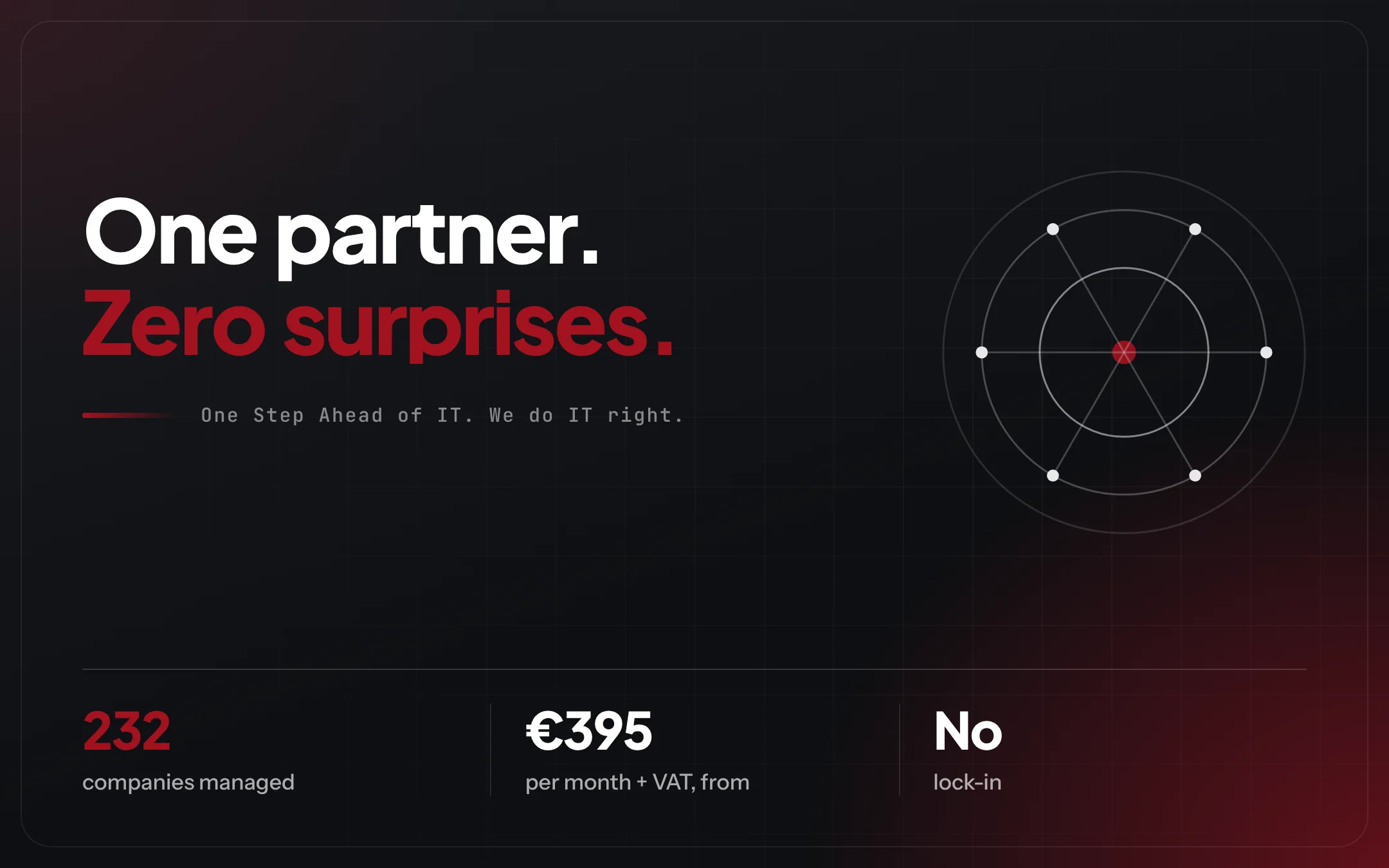
The phone system is provided only within an IT Unlimited contract, for companies with more than 10 workstations. Plans start at €395 per month + VAT for Essential; Premium, from €750, includes unlimited on-site support. Annual contract, automatic renewal and no lock-in.